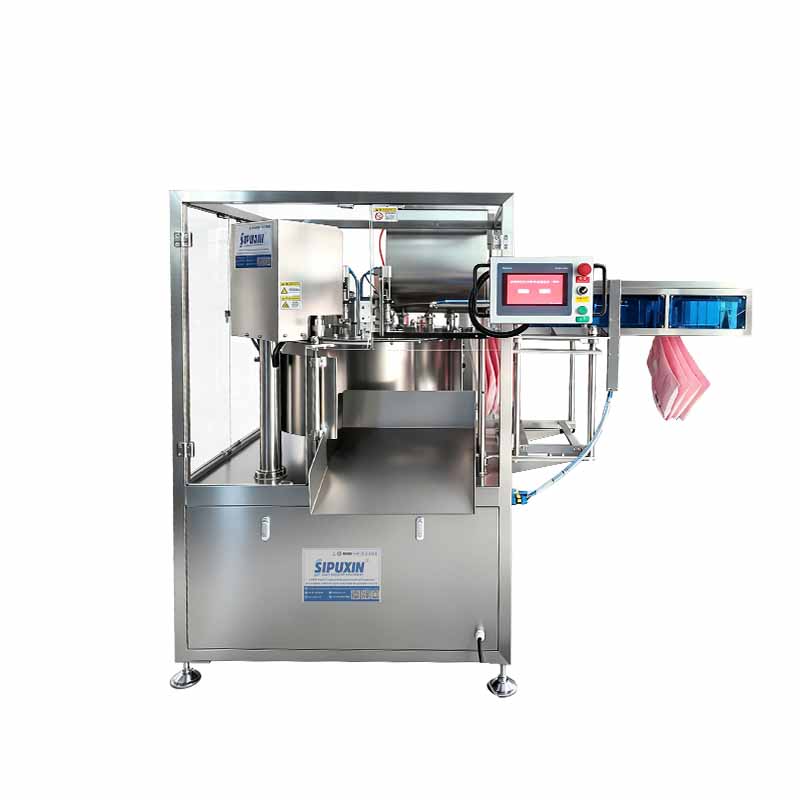
SIPUXIN Fully Automatic Chuck‑Type Vial Filling Machine
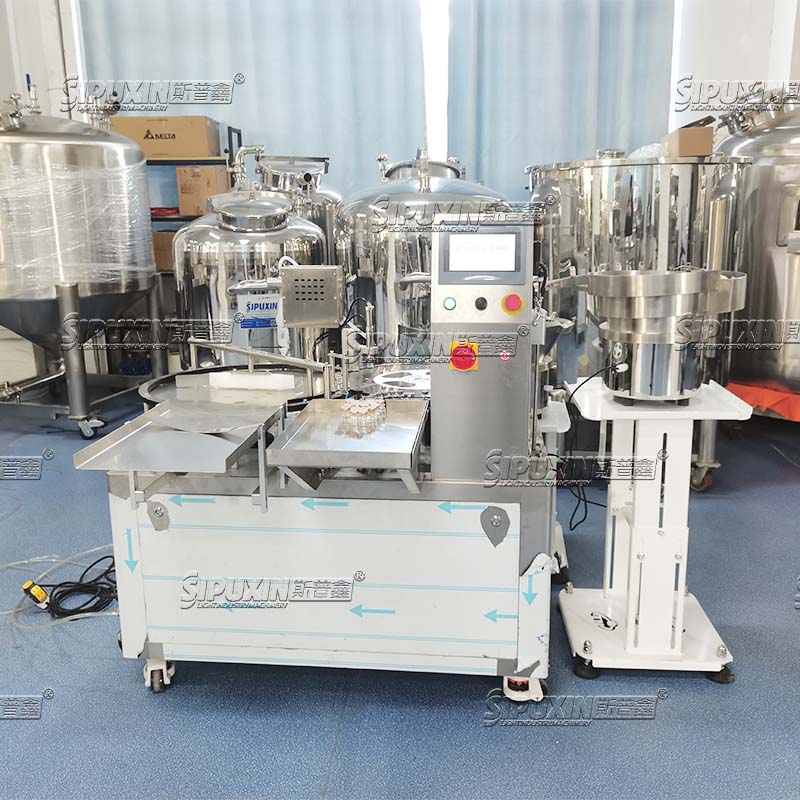


Fully‑Automatic Chuck‑Type Vial Filling & Capping Machine: Ideal Production Solution for Pharma & Cosmetic Small‑Vial Manufacturing
Abstract
Small glass vials are widely adopted for pharmaceutical injections, freeze‑dried preparations, cosmetic serums, plant extracts and health‑care oral liquids. Precise filling, stable stopper pressing and reliable capping are critical to guarantee product qualification and batch consistency. The SIPUXIN fully‑automatic chuck‑type vial filling‑capping integrated machine is purpose‑built for small glass‑vial mass production. It completes bottle feeding, metered liquid filling, rubber‑stopper pressing and aluminum‑cap sealing within one compact rotary unit. This article introduces its structural design, core advantages, technical specifications and real‑world application scenarios for industry practitioners and project buyers.
1. Introduction
Traditional small‑vial production lines often suffer from bottle tipping, unstable filling volume, complicated model switching and excessive manual intervention, which cannot satisfy GMP‑level hygiene requirements for pharmacy and high‑efficiency demands for cosmetic mass production. Ordinary linear filling machines struggle with positioning accuracy for tiny glass containers.
To resolve these pain points, the chuck‑type rotary filling‑capping machine adopts clamping‑positioning architecture. Each vial is steadily held by independent chucks during the whole working cycle. Automatic cap‑and‑stopper feeding together with PLC intelligent control largely lowers human operation. It balances high output, filling precision and sanitary performance, becoming a preferred option for medium‑and‑small batch to large‑scale vial production.
2. Machine Structure & Working Principle
The whole unit consists of bottle‑infeed station, rotary chuck turntable, filling assembly, rubber‑stopper pressing station, aluminum‑cap capping station, vibratory feeding system for stoppers and caps, PLC touch‑screen control cabinet and pneumatic driving module.
Working flow:
- Empty glass vials are conveyed into rotary chucks; each bottle is firmly clamped to avoid offset or falling.
- Vials rotate to filling station. Pumping units deliver liquid into bottles with preset volume. “No‑bottle no‑fill” logic prevents liquid waste.
- Filled vials move to stopper‑pressing position. Vibratory bowl automatically arranges and delivers rubber stoppers, then stoppers are pressed onto vial mouths.
- Vials proceed to capping station. Aluminum caps are sorted and fed, followed by roll‑crimp capping to achieve tight sealing.
- Finished products are discharged for next‑process collection.
Operators set speed, filling dosage and working parameters on the touch screen. Format adjustment for different vial sizes relies on mechanical fine‑tuning without heavy spare‑part replacement.
3. Core Advantages
3.1 Stable Chuck‑Clamping Structure
Different from side‑wall pushing positioning, rotary chucks grip bottle bodies. Even thin‑wall small glass vials keep stable during high‑speed running, greatly reducing breakage and bottle‑tipping failure rate.
3.2 High‑precision Liquid Dosing
Equipped with optional peristaltic pump or ceramic pump filling system. Filling accuracy reaches ±1%, suitable for low‑viscosity liquid including serum, medicinal solution and plant extract. No cross‑contamination risk when changing materials.
3.3 GMP‑Compliant Sanitary Construction
Main machine frame uses SUS304 stainless steel; liquid‑contact components can adopt SUS316L. Smooth surface is easy to clean and sanitize, meeting hygiene standards for pharmaceutical and cosmetic workshops.
3.4 Simple Size Change‑over
Producers frequently switch among multiple vial diameters and heights. This machine realizes format change by mechanical adjustment, shortening downtime for product switching.
3.5 Intelligent Safety Protection
PLC & human‑machine interface enables visualized parameter modification. Built‑in interlock functions: alarm and pause under abnormal status; stop filling without bottles. Universal casters support flexible workshop layout rearrangement.
4. Main Technical Parameters
| Item | Specification |
|---|---|
| Suitable container | Glass vial, diameter 12‑50 mm, height 30‑150 mm |
| Filling range | 1‑50 ml (customized upon requirement) |
| Production capacity | 40‑200 bottles per minute |
| Filling accuracy | ±1% |
| Power supply | 220V, 50/60Hz |
| Installed power | 1.8 kW |
| Working air pressure | 0.4‑0.6 MPa |
| Material | SUS304 main body; SUS316L optional for liquid‑contact parts |
5. Typical Application Scenarios
- Pharmaceutical industry: injection vials, freeze‑dried medicine vials, small‑dose oral liquid. Strict sealing and filling consistency help satisfy pharmaceutical regulatory demands.
- Cosmetic industry: essence serum vials, ampoule‑like glass bottles for skincare active ingredients. High cleanliness avoids cosmetic contamination.
- Health‑care & plant extract: herbal extracts, trace nutrient liquid, small‑volume functional liquid products.
- Customized project: special‑dimension vial production, new‑product trial‑run and commercial mass‑production. Machine configuration can be adjusted according to client‑provided bottle samples.
6. Conclusion
As small‑volume glass‑vial market keeps expanding, manufacturers demand filling‑capping equipment with higher stability, hygiene and flexibility. The SIPUXIN fully‑automatic chuck‑type vial filling‑capping machine solves common pain points such as bottle instability, low repeat‑precision and troublesome format replacement.
It fits both pilot‑scale trial‑production and formal mass‑production for pharmacy and cosmetic enterprises. For project investors and factory owners, selecting this integrated rotary machine helps improve production efficiency, cut labor cost and guarantee batch‑to‑batch product uniformity. Customers may provide bottle drawings or physical samples for customized configuration, factory inspection and machine test‑run verification.


500L Electric Heating Mixing Tank
200L Mobile Electric Heating Vacuum Homogenizing Emulsifier with Dispersing Disc
Related Article